Technically not a "vitamin," vitamin D is in a class by itself. Its metabolic product, calcitriol, is actually a secosteroid hormone that targets over 2000 genes (about 10% of the human genome) in the human body. Current research has implicated vitamin D deficiency as a major factor in the pathology of at least 17 varieties of cancer as well as heart disease, stroke, hypertension, autoimmune diseases, diabetes, depression, chronic pain, osteoarthritis, osteoporosis, muscle weakness, muscle wasting, birth defects, periodontal disease, and more.
Vitamin D's influence on key biological functions vital to one's health and well-being mandates that vitamin D no longer be ignored by the health care industry nor by individuals striving to achieve and maintain a greater state of health.
Monday, January 4, 2010
232 Toxins Found In Babies
Sunday, January 3, 2010
Laboratory tests commissioned by the Environmental Working Group have detected bisphenol A (BPA), a plastic component and synthetic estrogen, in umbilical cord blood of American infants.
Nine of 10 randomly selected samples of cord blood tested positive for BPA, an industrial petrochemical.
BPA has been implicated in a lengthening list of serious chronic disorders, including cancer, cognitive and behavioral impairments, endocrine system disruption, reproductive and cardiovascular system abnormalities, diabetes, asthma and obesity.
In all, the tests found as many as 232 chemicals in the 10 newborns, all of minority descent. The cord blood study has produced hard new evidence that American children are being exposed, beginning in the womb, to complex mixtures of dangerous substances that may have lifelong consequences.
And in a separate study, researchers found that complications of pregnancy, such as preterm labor, preterm birth, and infection were lowest in women with the highest vitamin D levels.
Click HERE to read rest of this article.


Saturday, November 21, 2009
Vitamin D Dramatically Cuts Cancer Risk: Study
CTV.ca News Staff
Jun. 7 2007
A landmark new study is raising the tantalizing spectre that a simple and cheap vitamin supplement may offer a highly effective way of preventing cancer.
The research, published in the online edition of the American Journal of Clinical Nutrition, finds that a combination of vitamin D3 and calcium has a substantially marked effect on reducing cancer incidence.
The four-year study out of Creighton University in Nebraska found that women who regularly took vitamin D3 had a 60 percent reduction in cancer infections compared to a group taking placebos.
The study followed 1,179 healthy, women 55 years and older from rural eastern Nebraska between 2000 and 2005. Participants were randomly assigned to receive 1400-1500 mg of calcium alone, or supplemental calcium plus 1,100 IU vitamin D3, or placebo.
Among the 288 women taking placebo, 20 developed breast, colon, lung or another form of cancer. Among the 445 women taking just calcium, 17 developed cancer. But among the largest group -- the 446 women taking vitamin D daily -- just 13 developed cancer.
"What we found is that a vitamin D supplement decreased the cancer incidence in postmenopausal women by about 60 percent," lead investigator Joan Lappe, an associate professor of both medicine and nursing at Creighton University, told CTV News.
Click HERE to read the rest of this article.
Sunday, November 8, 2009
Spray Vitamins: An Amazing Breakthrough!

As illustrated in the Physician's Desk Reference. Age is a major factor in absorption, because as we age, it becomes impossible for the body to have adequate uptake. Although absorption problems exist in younger people, persons over the age of 35 are more likely to have absorption problems. The unfortunate thing is that as we get older, digestive problems tend to increase, while at the same time, proper absorption becomes even more important. Age presents a problem that dramatically increases the "odds" against us in the gamble for optimum nutrition.
There is now an easy and convenient way to supplement your nutritional needs. Spray vitamins, using the patent protected, oral spray delivery method, now makes it easy for you to get what your body needs, when it needs it. This unique delivery system is supported by the prestigious Physicians' Desk Reference for Non-Prescription Drugs & Dietary Supplements, as the best way to achieve the nutritional supplement levels your body demands.
Friday, November 6, 2009
Doctors start to include vitamin D in fight against cancer
Oncology treatments
With new studies showing the sun vitamin may slow come cancers, some physicians are eager to add it to treatment programs.
Responding to research indicating that vitamin D may slow the progression of breast, colon and other common cancers, some doctors have begun adding the supplement to their tool kit of cancer therapies alongside more conventional treatments such as radiation, surgery and chemotherapy.
Click HERE to read the rest of this article.
Thursday, November 5, 2009
Use Vitamin D As Flu Medicine
Vitamin D is growing in popularity as a way to prevent flu. Current medical research has identified a correlation between seasonal Vitamin D levels and influenza. The more sun, the less illness. The less sun, the more flu. Research has also shown that vitamin D prevents respiratory infections in adults and children. Lots of flu remedies provide flu relief, but Vitamin D actually prevents flu. It is especially effective at preventing respiratory illness making it a perfect flu medicine.
Read more...Monday, November 2, 2009
The Vitamin D Newsletter: H1N1 Flu and Vitamin D
Dr. Cannell:
I have received hundreds of emails from readers, asking what they should do about the possibility of an H1N1 flu pandemic.
1. Should I take Vitamin D to prevent the H1N1 flu? If so, how much?
2. What role did Vitamin D play in the 1918 pandemic, when 600,000 Americans died?
3. If I get this flu, should I take very high doses of vitamin D? Is so, how much?
4. Should I take the special flu vaccine the CDC and others are developing?
5. What are you going to do for your family about the 2009 flu?
6. Why does the CDC and NIH ignore the Vitamin D studies?
Wednesday, October 21, 2009

Monday, October 19, 2009
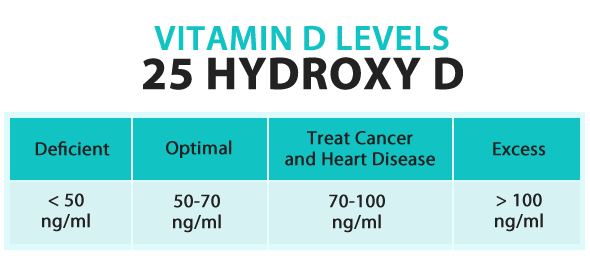
Determine Your OPTIMAL Level of Vitamin D
Click on image to open in new window.
Keeping your level in this range, and even erring toward the higher numbers in this range, is going to give you the most protective benefit। And the way you maintain your levels within this range is by getting tested regularly – say two to four times a year in the beginning, and adjusting your vitamin D intake accordingly.
CHANGE 'Breast Cancer Awareness Month' to 'Breast Cancer PREVENTION Month'
It's time. The tools are at hand. It just takes our combined efforts. Drs Cedric Garland, UCSD School of Medicine and Tracey O'Connor, Roswell Park Cancer Institute will present information on how prevention can work with vitamin D and, what a cancer treatment protocol would look like. Save your daughters!--your wives, your friends, your patients from this disease.
Don't stop with breast cancer--infectious diseases, type 1 diabetes, hypertension, colon cancer, falls in the elderly are just a few more diseases that are affected by vitamin D serum levels. The objective of the seminar will be to provide all health care professionals with the information needed to take action NOW. It is estimated that 25-50% of any healthcare budget could be saved with vitamin D serum levels between 40-60 ng/ml (100-150 nmol/L).
Reduce All Cancer Incidence by 77% with Vitamin D? - Seminar
The Grassroots Health organization has announced a seminar on the health impact of solving the vitamin D deficiency epidemic. The seminar will be held on November 3, 2009 at the University of Toronto, Ontario, Canada. The price is $55, and includes a free vitamin D test for those registering by October 15.
While directed at health professionals, the mere existence of the seminar should underscore the potential health benefits of everyone getting enough vitamin D. Among the statistics cited in the seminar announcement are a 77% reduction in all cancer incidence, a 80% reduction in breast cancer, and a 78% reduction in type-1 diabetes.


